

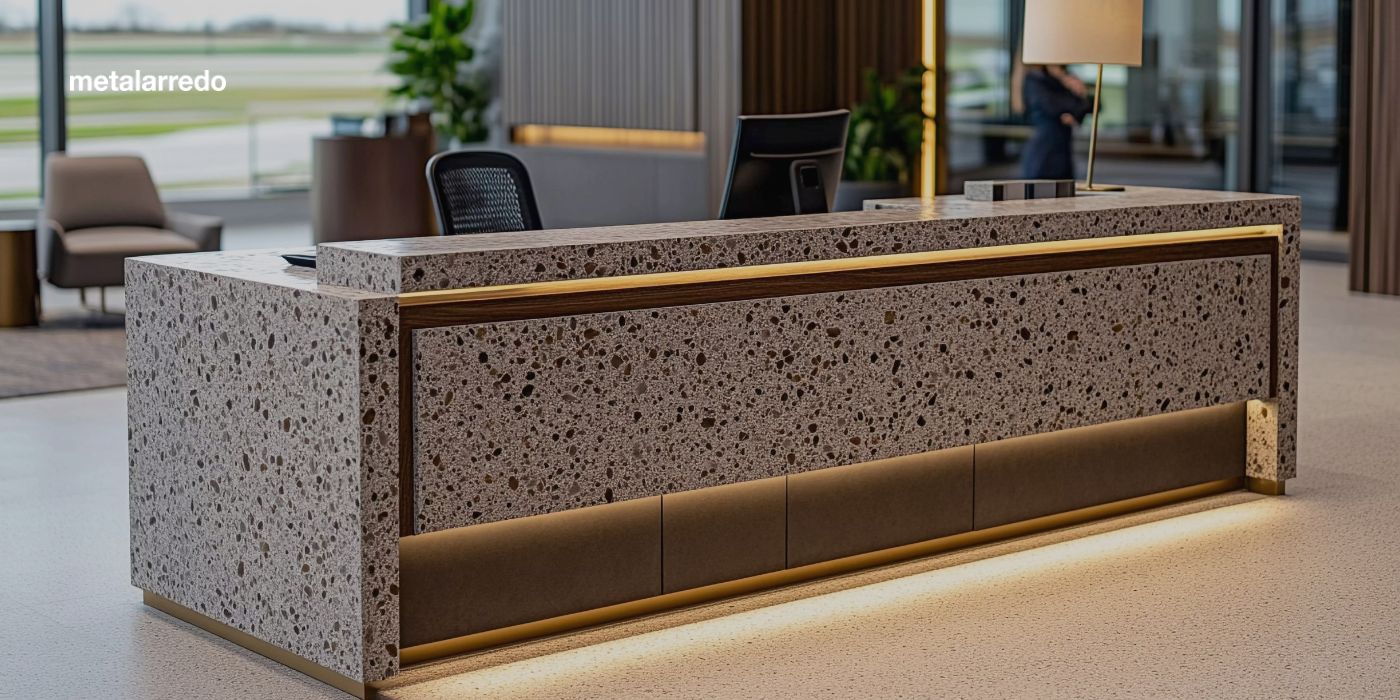
How LED light enhances materials: highlighting surfaces and finishes in furniture
In contemporary furniture design, materials take center stage. Natural woods, matte lacquers, marble, satin metals, and textured surfaces convey identity, quality, and product positioning. However, without careful lighting design, even the most sophisticated finishes can lose depth and perceived value.
Today, lighting is integrated into the project from the very beginning. It enhances volumes, surfaces, and details, directly influencing how a space is perceived.
In this article, we explore how LED lighting can highlight textures and finishes in furniture, analyzing how it interacts with materials, the most effective integration solutions, and the possibilities offered by LED systems designed specifically for furniture. The goal is to design lighting that enhances aesthetic appeal, ensures visual comfort, and offers maximum flexibility.
Article sections:
- Light and materials: a design relationship, not just a technical aspect
- Choosing the right light for each finish
- Grazing light: when texture takes the spotlight
- Uniform illumination and visual continuity
- Spotlights and accents: highlighting details and niches
- Lighting to enhance value
Light and materials: a design relationship, not just a technical aspect
Light doesn’t only make an object visible, it changes how we perceive it.
Every surface - natural wood, matte lacquer, marble, glass, or metal - reacts differently depending on its reflectance, texture, and light direction.
Wood with pronounced grain gains depth and dimensionality when lit with grazing light and warm tones. Glossy surfaces require even illumination and glare control, while satin metals and technical finishes need precise lighting to emphasize materiality without altering their color.
For those designing custom furniture or contract collections, this means integrating lighting from the earliest design stages. Light becomes part of the material concept, directly contributing to the perceived value of the finished product.
Choosing the right light for each finish
Color temperature strongly influences how materials appear. In furniture applications, the most common choices are:
- 2700K – 3000K: enhance natural woods and warm surfaces;
- 3000K – 4000K: neutral balance;
- >4000K: for more technical or functional environments.
Alongside color temperature, the Color Rendering Index (CRI) is fundamental. For furniture applications, solutions with CRI >90 ensure the true colors of wood, fabrics, marble, and lacquers are faithfully reproduced. High CRI avoids unwanted shifts and maintains consistency between material samples and the installed result.
LED strips for furniture, designed for integration in aluminum or polycarbonate profiles, ensure color stability over time and uniform illumination, key in contract projects and serial production.
Grazing light: when texture takes the spotlight
Grazing light is one of the most effective techniques for highlighting textured surfaces. By positioning the light close to the panel at a controlled angle, micro-shadows enhance the depth of the texture.
This approach works particularly well for:
- Wood panels with pronounced grain
- Textured stone or ceramic surfaces
- Boiserie and decorative vertical panels
- Feature walls and scenic backdrops
Integrating aluminum LED profiles flush with panels or vertical posts allows for continuous, linear light emission, keeping clean lines and harmony with the furniture design.
Uniform illumination and visual continuity
When lighting large surfaces like kitchen backsplashes, niches, bookcases, or wardrobes, uniformity becomes essential. Visible LED points or uneven light immediately reduce the perceived quality of the project.
To achieve truly continuous lighting, it’s important to consider the distance between strip and diffuser, use high-density LEDs to prevent point-light effects, and select aluminum profiles with proper thermal management, ensuring stability and longevity. A well-designed diffuser helps even out the light and improve visual comfort, especially in residential, hospitality, and retail settings.
In furniture-integrated LED systems, these details make the difference between a standard solution and a professional result, enhancing the overall project.
Spotlights and accents: highlighting details and niches
Alongside continuous light lines, integrable LED spotlights allow for targeted accents and visual hierarchy.
In retail, hospitality, or residential spaces, spotlights can be used to:
- highlight display niches
- illuminate glass shelves
- emphasize decorative objects
- showcase material details
Adjustable beam angles give precise control over light distribution, focusing attention on specific points or creating broader, directional illumination.
Lighting to enhance value
Lighting a material means bringing out its characteristics, respecting its tones, and highlighting its texture. It turns a surface into a central element of the project.
Thanks to LED systems designed for furniture - aluminum profiles, high-uniformity strips, integrable spotlights, and customizable solutions - you can achieve a high-level technical and aesthetic result, enhancing the perceived quality of the final product.
If you are developing a new project or want to identify the best lighting solution for your surfaces and finishes, fill out the contact form below or email us at
Want to find out more? Fill out the form below, and a Metalarredo lighting expert will take up your request as soon as possible.

Select your language
Sign up for the newsletter and stay up-to-date
© 2024 Copyright. Metalarredo S.r.l. | Privacy policy. Cookie Policy | P.IVA e C.F. 04485950267 | Iscrizione REA TV-354017 | Cap. sociale 100.000€
Designed by Vaultinn